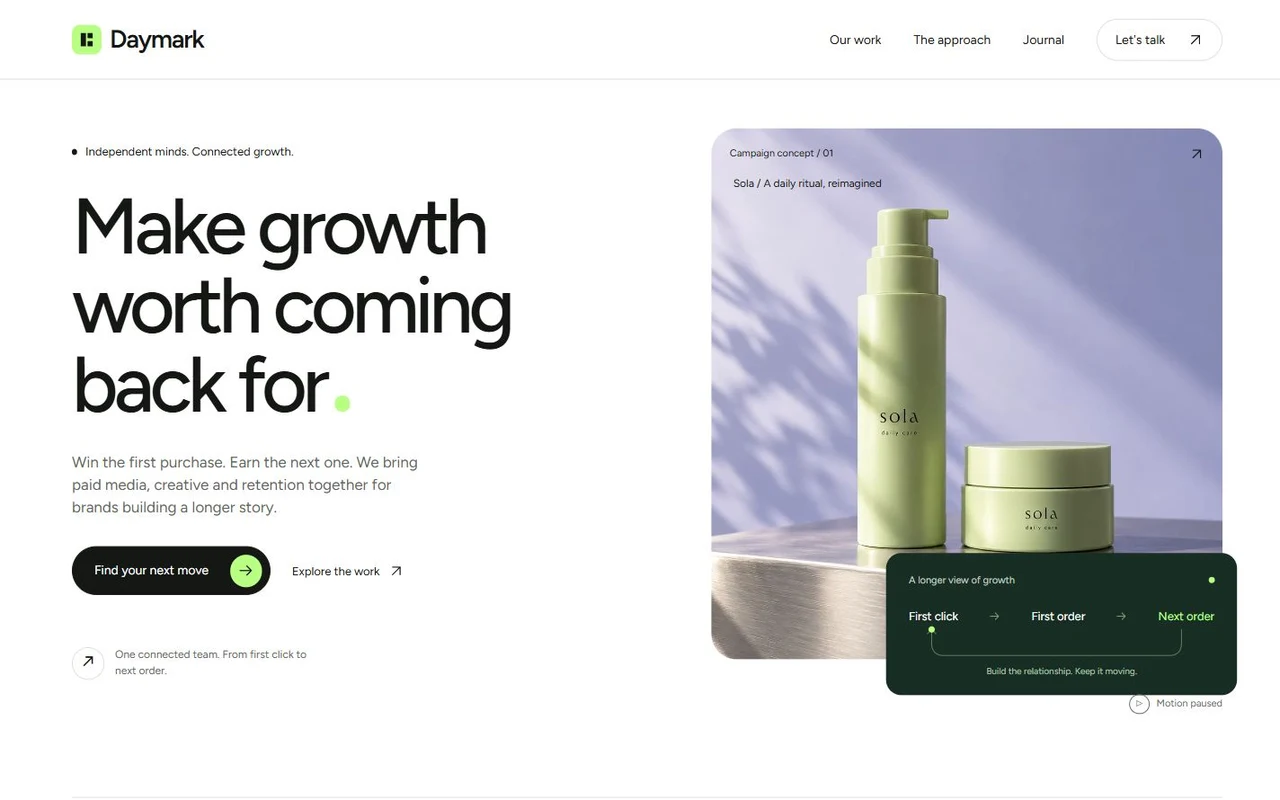
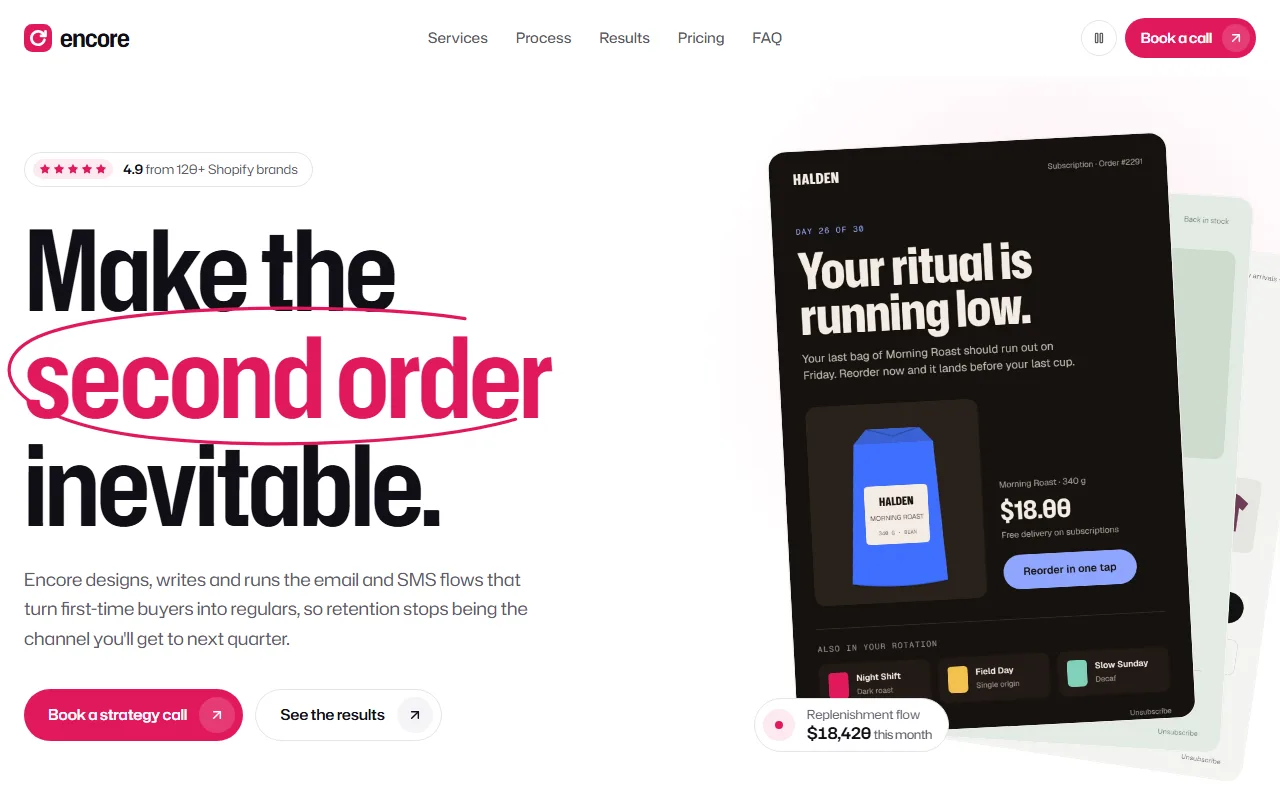
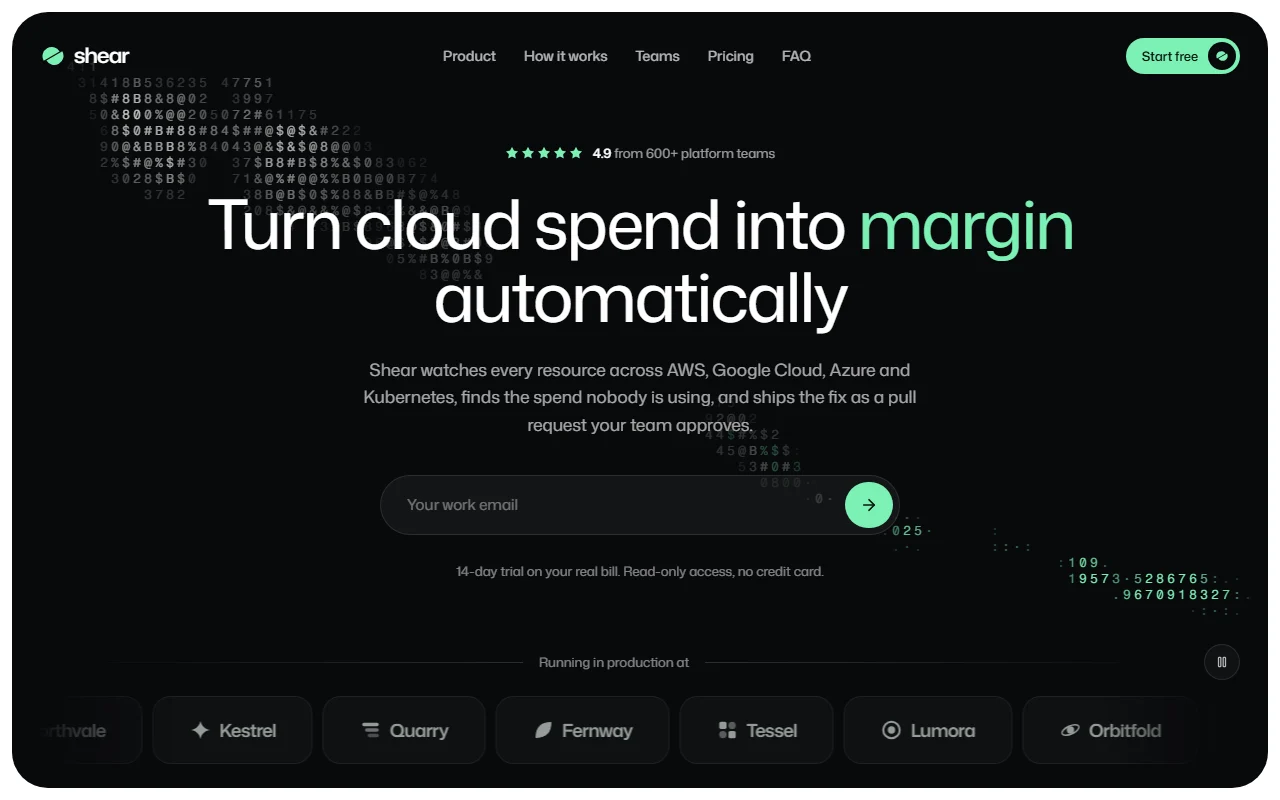
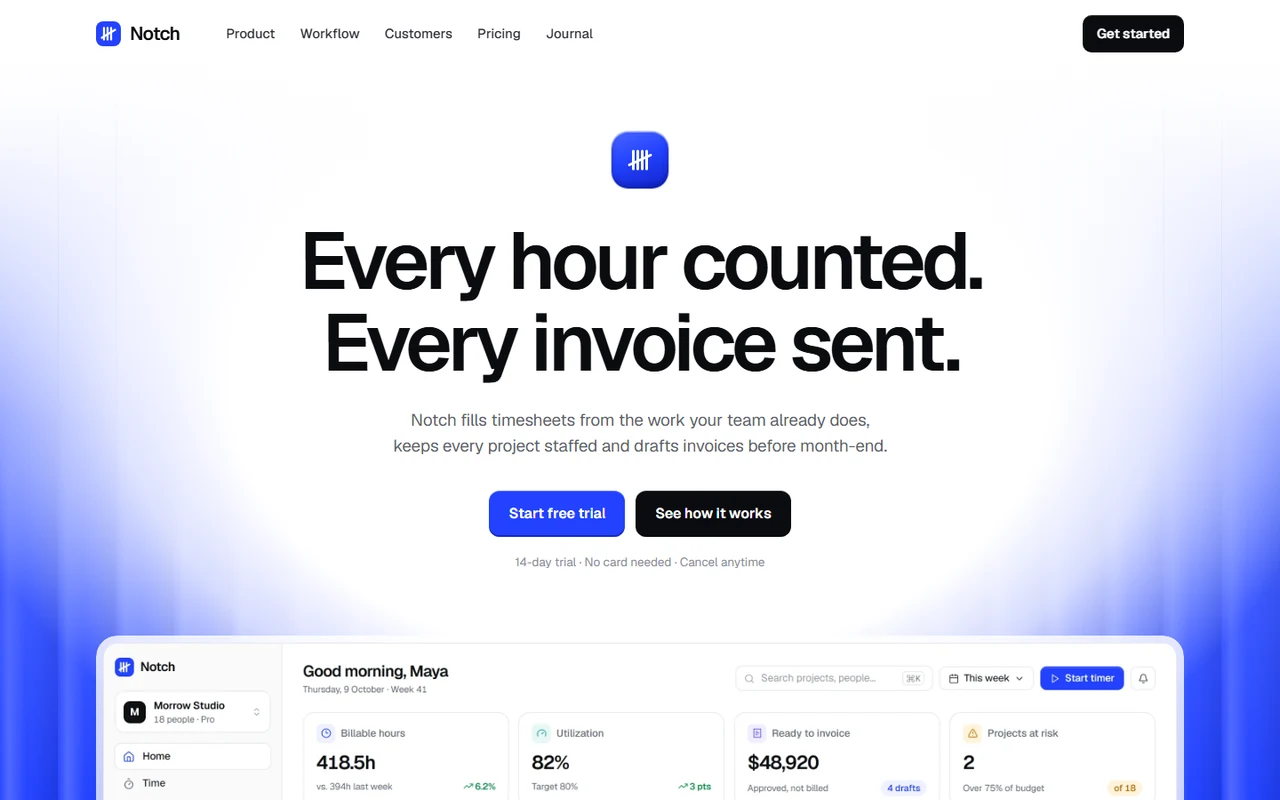
Tessera: Motion-led AI systems and automation studio template for Next.js.
- Next.js 15
- CSS
- TypeScript
- 9 sections
- Dark
- No API keys
- Updated Oct 10, 2026

Overview
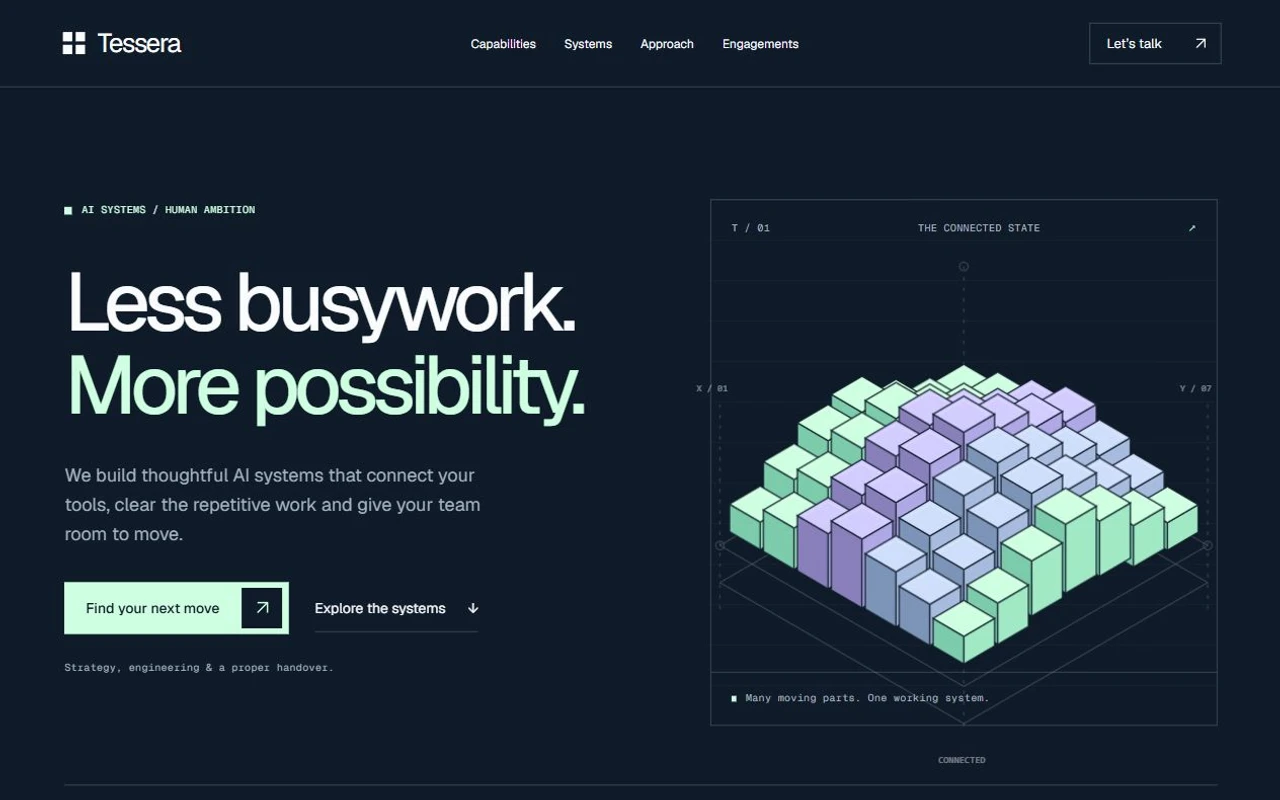
A complete independent studio site positioned around practical operations and human judgment. A kinetic isometric sculpture introduces the brand, an in-place explorer makes the services concrete, and original example architectures explain the work without fabricated client results.
- Made for
- AI implementation and automation studios, Operations consultancies and integration partners, Technical agencies that value clear explanations and a strong motion identity
- Highlights
- Original isometric geometry, breathing tiles and scroll-linked details
- Keyboard-accessible capability tabs and connected workflow diagrams
- Three full system studies, two journal articles and a validated contact brief
- Rolling offer prices, animated FAQ and system reduced-motion support
- The look
- Deep navy and cool white with mint, lilac and pale blue. Locally served Geist and Geist Mono, large asymmetric typography, square surfaces and fine borders. Original SVG sculptures, workflow diagrams and CSS article artwork form one visual system. No remote imagery or animation library.
Sections
- 01
Hero and navigation
An asymmetric two-line headline reveals through drawing blocks beside a 49-tile isometric sculpture. Individual tiles breathe on CSS timelines, the sculpture shifts with scroll, and the fixed header contracts into a compact bar. On phones the menu grows from that same header.
- 02
Studio statement
Three editorial lines reveal independently, followed by the studio’s principles and positioning.
- 03
Capability explorer
Four keyboard-accessible tabs change the background, workflow nodes, description and deliverables inside one panel. Animated signals move between the diagram’s steps.
- 04
System studies
Three distinct isometric objects introduce example architectures. Each card opens a full story with a workflow map, scope, friction and intended change, three narrative sections and a next-study link.
- 05
Approach and foundations
A sticky narrative and scroll-rotating modular mark sit beside four process steps. A dark chapter explains visible decisions, handover and evaluation, followed by a connected-tool strip.
- 06
Engagements
Two offers with project and ongoing modes, a sliding selector and rolling digit prices. Offer buttons prefill the contact page’s engagement field.
- 07
FAQ and field notes
A smoothly resizing accordion and two original journal notes, each with a full article page and geometric artwork.
- 08
Closing and footer
A large mint-accented invitation, useful contact and section links, and a wordmark that rises slightly with scroll.
- 09
Contact and legal pages
A validated brief that prepares a reviewable email draft by default or submits JSON to a configured HTTPS endpoint. Clear pending, received and retry states, plus editable privacy and terms pages and a custom 404.
Remove a section by deleting its line in app/page.tsx, or move the line to reorder.
Make it yours
Brand, copy, offers, capabilities, links and form integration live in one config. System studies and notes are plain content files. The geometry is code-native and every section has its own component.
| To change | Edit |
|---|---|
| Brand, page copy, offers, FAQ and links | site.config.ts |
| System study cards and full story pages | data/systems.ts |
| Journal notes and article pages | data/notes.ts |
| Booking destination, email and JSON form endpoint | site.config.ts → links and email |
| Palette, spacing and typography | styles/base.css and app/layout.tsx |
| Isometric forms and workflow diagrams | components/art/ |
| Section order | app/page.tsx |
Run it
$ npm install$ npm run devNode.js 20.9 or newer. No environment variables.
Before you go live
Replace the fictional studio identity, example URL and email, illustrative offers and system stories. Set the booking destination or HTTPS form endpoint, replace the legal starter copy and test delivery with your own service.
Specifications
- Framework
- Next.js 15 (App Router), React 19
- Language
- TypeScript
- Styling
- CSS with design tokens and component styles
- Fonts
- Geist, Geist Mono, self-hosted with next/font
- Dependencies
- next, react, react-dom
- Images
- Original SVG geometry and CSS compositions, including four isometric formations, a workflow diagram system, article art, brand mark and favicon. All artwork is local code; no stock images or external media accounts are required. Font licenses are bundled.
- API keys and environment variables
- None
- Node.js
- 20.9 or newer
- Colour scheme
- Dark
- Responsive
- Desktop, tablet and phone
- Accessibility
- Skip link, visible focus, keyboard navigation, reduced motion
- Deploys to
- Vercel, Netlify, Cloudflare Pages or any Node host
- Codebase
- 57 source files, about 4,500 lines
- Last updated
- Oct 10, 2026
License
One license, no tiers. The full text ships as LICENSE.md in the download.
You can
- Use it for your own products
- Use it for any number of client projects
- Change the code and design however you like
- Deploy the result commercially
You can’t
- Resell or share the files as a template, theme or UI kit
- Publish the source as a template in a public repository
Questions
What do I get when I buy Tessera?
The complete Tessera project as a download: the Next.js app, its config file, a README with setup and customisation notes, and the license. The download link arrives right after checkout.
Can I use Tessera for client projects?
Yes. One purchase covers your own products and any number of client projects, and you can change the code however you like. What you can’t do is resell or share the template files themselves as a template or UI kit.
Do I need API keys, a database or a backend?
No. It runs with npm install and npm run dev and deploys to Vercel, Netlify or Cloudflare Pages without any environment variables.
What should I change before I launch?
Replace the fictional studio identity, example URL and email, illustrative offers and system stories. Set the booking destination or HTTPS form endpoint, replace the legal starter copy and test delivery with your own service.
Do I need to know Next.js?
Basic React helps, but most changes are text edits in site.config.ts. The README walks through colours, fonts and section order.
How do updates work?
Updates to Tessera are free. When a new version ships, download it again from the link in your order email.
Can I get a refund?
Yes. If Tessera isn’t right for you, reply to your receipt within 14 days and you get your money back.
Should I buy all-access instead?
If you’ll use more than two templates, yes. All-access is $99 for all 35 templates, including Tessera and every template added later. Three single templates would cost $117.
All-access
All 35 templates for $99.
Every template in the library, including Tessera, and every one added later. Same license, free updates. Less than three single templates.